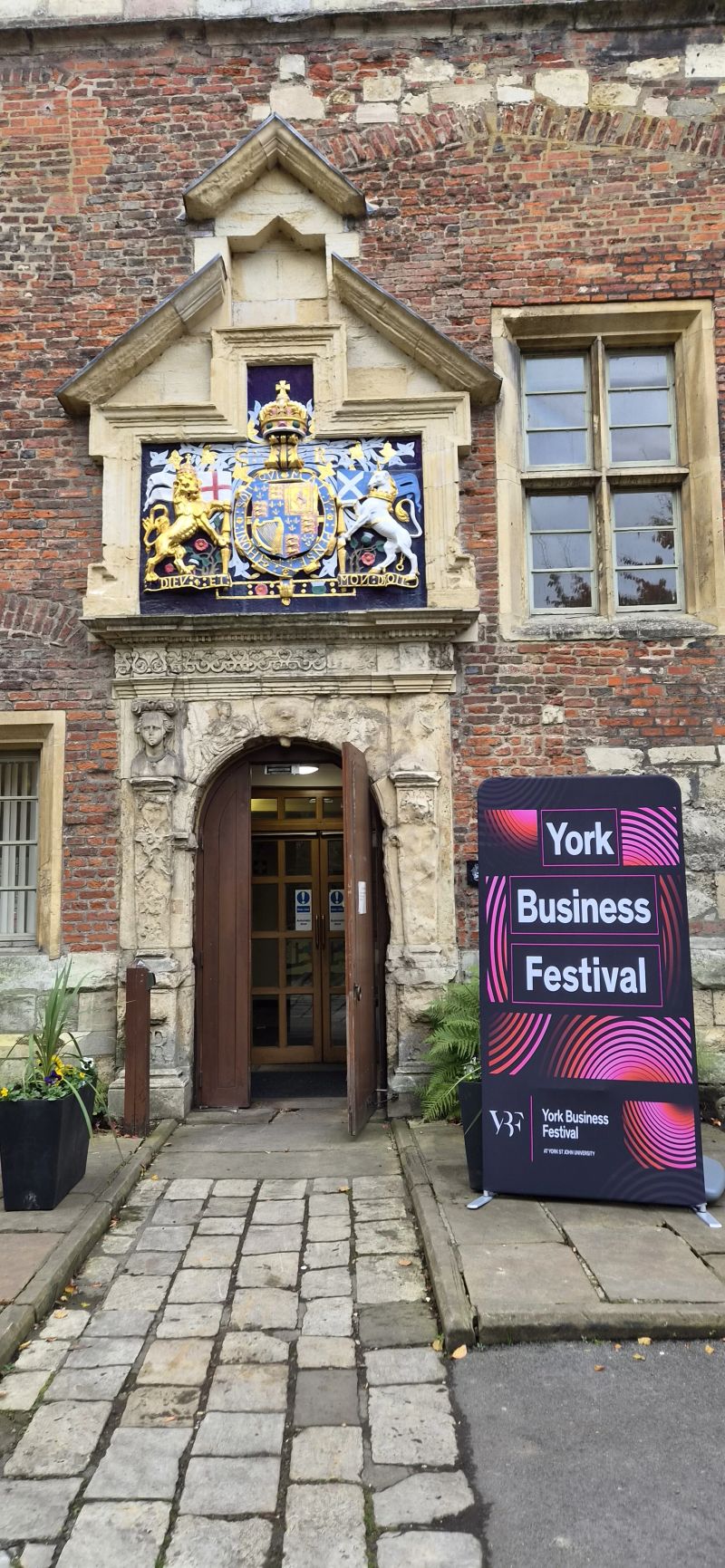

Last week, I attended York Business Festival, where I met someone from City of York Council who was kind enough to offer some advice and point me towards support available for local businesses.
We arranged to meet for a coffee this week and had a really useful conversation about business support, potential funding opportunities and ways to connect with other organisations.
During the conversation, I mentioned something I have been thinking about for a while.
I am not convinced that many businesses realise just how affordable bespoke software, automation and AI solutions can be these days.
When people hear the words "bespoke software", I suspect they often imagine large development teams, lengthy projects and substantial budgets.
Historically, that has not been an unreasonable assumption.
But things have changed quite significantly, particularly over the last couple of years, and I wanted to share some thoughts on why that is, along with some actual figures to give businesses an idea of what is possible.
How AI Has Changed the Way I Work
Something people regularly ask me is whether I am concerned about AI replacing software developers.
My answer is generally the opposite.
AI has made me considerably more efficient at what I do.
I have spent close to 20 years working in software quality assurance, testing and delivery, much of that involving large enterprise systems. Over that time, I have developed a pretty good understanding of what makes software reliable, how systems should work together and, perhaps most importantly, what can go wrong when things are not done properly.
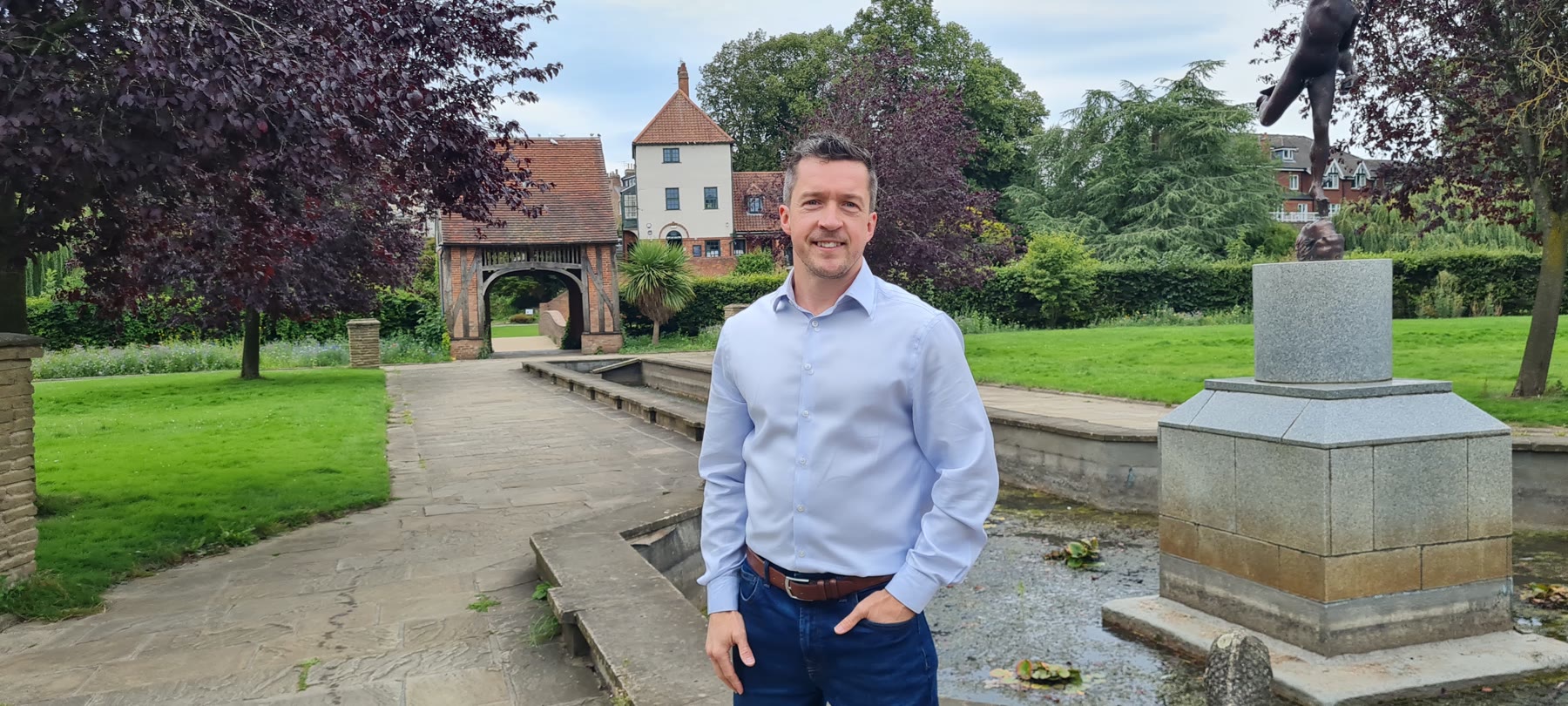
That experience has not suddenly become irrelevant because AI can now help write code.
If anything, I think it has become more valuable.
I use AI tools extensively during development. They allow me to work through certain tasks much more quickly than I could previously, whether that is writing code, investigating problems or working through different approaches to a solution.
But there is an important distinction between generating code and delivering a reliable piece of software that a business can actually depend on.
You still need to understand the requirements, make sensible technical decisions, test things properly and consider how the system will be maintained.
AI helps me work more efficiently, but the responsibility for delivering something that works properly remains with me.
The benefit of that efficiency is something I can pass on to my clients.
For smaller projects, I can often manage the entire development myself. For larger systems, I can bring in specialists where they are needed, whether that is expertise in data, reporting, particular platforms or other technical areas.
It means I can keep the approach proportionate to the work involved, rather than every project needing a large team from the outset.
So, What Does Bespoke Software Actually Cost?
This is probably the part I think businesses would find most useful.
Obviously, there is no universal price for developing software. Two projects that sound relatively similar on paper can involve very different amounts of work.
But I do not think that should stop us from talking about costs.
Based on the types of solutions I work with and what I believe can realistically be delivered, here are some indicative figures.
| Approximate project cost | What could be possible |
|---|---|
| £500 to £2,000 | Small automations. Removing a specific repetitive task, such as transferring information between systems, generating regular reports, processing spreadsheet data or automatically creating records from incoming emails. |
| £2,000 to £5,000 | More involved automation and AI integrations. An AI assistant that can answer questions using your company's information, a document processing solution that extracts and organises information, or an integration connecting existing business systems with some custom logic. |
| £5,000 to £15,000 | Bespoke internal applications and connected workflows. For example, a system that receives enquiries, processes information, checks existing records, updates a CRM and provides staff with a dashboard to manage the process. These projects might involve databases, multiple integrations, user interfaces, permissions and more substantial testing. |
| £25,000+ | Larger bespoke business platforms. Systems designed to support multiple areas of a business, potentially bringing together customer information, operations, project management, reporting and existing software into one platform. |
(These are illustrative project prices, excluding VAT, rather than fixed quotations. The actual cost depends on the requirements, complexity and existing systems involved.)
There can also be ongoing costs to consider, such as hosting, third party software subscriptions, AI usage and maintenance. Those should be understood before committing to a project, rather than being an unpleasant surprise afterwards.
At the larger end of the scale, I have worked on an operations platform for a property business that brings together different elements of its day to day activities. That is a very different undertaking from automating a single task, and naturally requires a much larger investment.
But that is really my point.
Not every business needs a £25,000 system. Sometimes a £1,000 automation might be all that is required to solve a particular problem.
It Is Also Worth Considering What the Problem Is Costing You
One thing I think is often overlooked when discussing software costs is the amount of time businesses are already spending on processes that could potentially be automated.
Take something fairly straightforward.
Imagine someone in your business spends five hours every week copying information between systems, updating spreadsheets or preparing reports.
At an illustrative employment cost of £20 per hour, that is around £5,200 worth of staff time over a year.
If a £2,000 automation could remove most of that work, the investment could potentially pay for itself within months.
Of course, the calculation is not always that straightforward. Not every hour saved translates directly into money saved, and there may be ongoing costs.
But those hours could be spent doing something more useful, whether that is supporting customers, developing new business or simply reducing the workload on an already busy team.
That is before considering the potential benefits of reducing mistakes, avoiding duplicated work or making information available more quickly.
I think looking at the cost of the problem, rather than just the price of the solution, is a much better way of deciding whether an investment makes sense.
You Do Not Necessarily Need to Change Everything
Another thing worth mentioning is that adopting technology does not have to involve replacing all your existing software.
In fact, quite often, I would suggest the opposite.
Many businesses already have systems they are comfortable with. They might be using a CRM, accounting software, spreadsheets, project management tools or some combination of all of them.
The problem is not necessarily that those systems are bad.
It might simply be that they do not communicate particularly well, or that someone is having to do a lot of manual work to keep everything up to date.
Sometimes the best solution is to build something relatively small that connects those existing tools or takes care of a specific part of the process.
Once that is working, there is nothing stopping the business from building on it later.
I think there is a tendency when discussing AI and automation to focus on fairly ambitious ideas about transforming entire businesses.
There is certainly a place for that.
But there is also a lot of value in identifying one frustrating, time consuming process and making it work better.
You do not have to do everything at once.

Making Technology More Accessible
I suppose the main reason I wanted to write this is that I think there is still a gap between what is technically possible today and what many businesses realise is available to them.
The tools available to developers have improved enormously, and AI is a significant part of that.
It does not mean software development has become effortless, or that good quality systems can be produced without experience and proper testing.
But it does mean that someone with the right experience can potentially deliver solutions far more efficiently than would have been possible a few years ago.
Ultimately, that should benefit the businesses paying for them.
I am not suggesting every business should rush out and commission bespoke software. Sometimes an existing off the shelf product will do the job perfectly well, and I will happily say so if that is the case.
But if there is something in your business that takes up too much time, involves repetitive manual work or simply does not work quite how you would like it to, it might be worth exploring what is possible.
You could be surprised by how little it might cost to put right.
If you have an idea or a problem you think technology might help with, feel free to get in touch with me at craig@birdcagetech.com or fill in the form on the website.
Even if you are not sure what the solution would look like, I am always happy to have a conversation about it.