
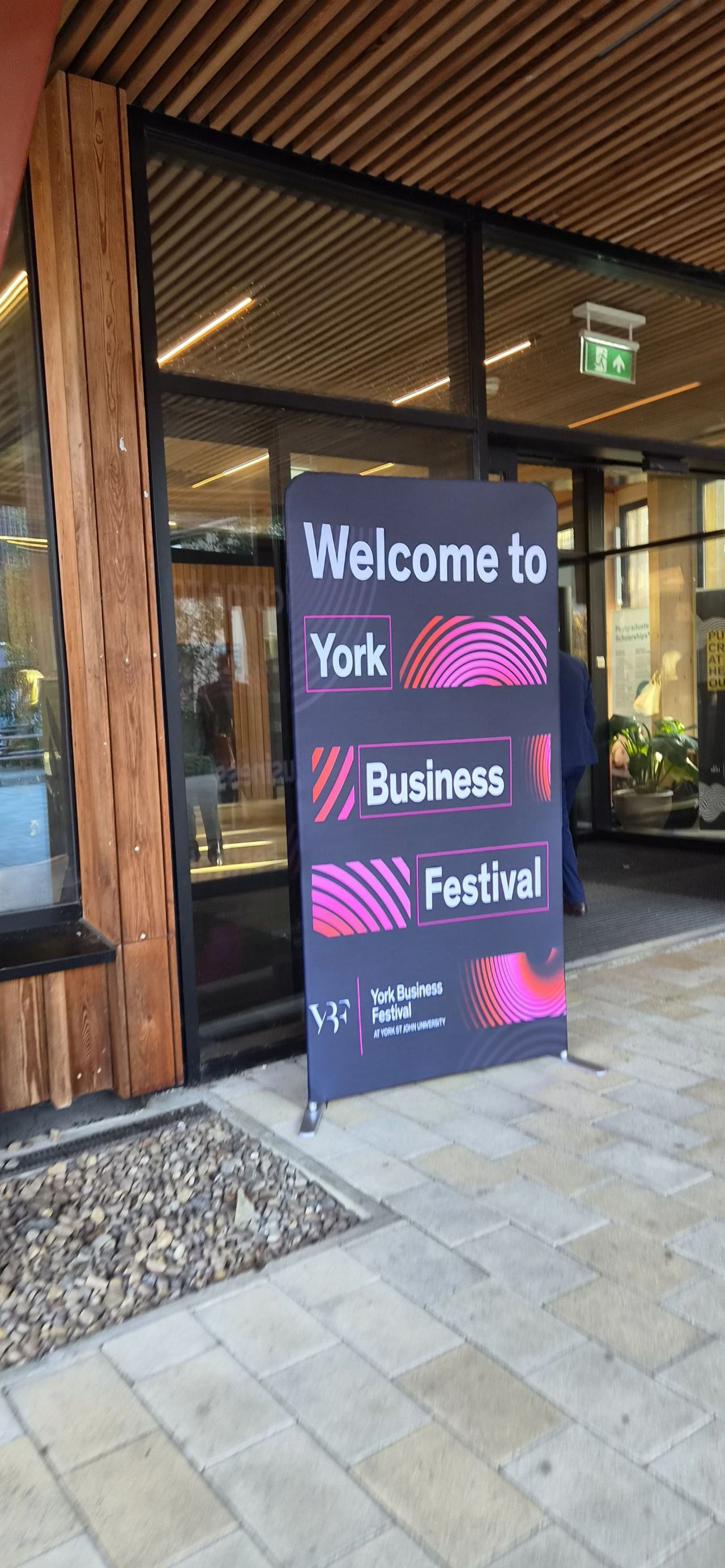
I spent two full days at York Business Festival this week, hosted by York St John University. I came away tired, with a full notebook, quite a few new contacts and a much clearer idea of where I need to put my focus next with Birdcage Tech.
The festival brought together an unusually broad mix of people. There were solo founders finding their feet, established local businesses, university academics, professional advisers and people who have built companies worth billions.
What stood out was how supportive the business community in York felt. This was not just a room full of people handing out business cards and trying to sell something. People were genuinely willing to share what they knew, introduce one another and talk honestly about the problems they were working through.
Some of the most useful moments happened between the formal sessions. People I already knew introduced me to new contacts. Then, on the second day, people I had only met the day before introduced me to somebody else. Those connections started compounding surprisingly quickly.
That is one of the real benefits of attending something over two days. On the first morning, most people are strangers. By the end of the second day, you have begun to feel part of a community.
Going Back to University as a Student
The university setting added something important to the experience.
I decided that the best way to approach the festival was to think of myself as a student again. I was not there to walk around pretending I already had everything worked out. I wanted to be completely open to new ideas and absorb as much as possible from people who had been there and done it, as well as people currently dealing with the same situations I am.
That change in mindset matters. As a business owner, there can be pressure to present yourself as the person with the answers. You are meant to appear confident about your direction, your offer and what happens next.
In reality, running a business involves constantly encountering things you do not yet know. You can either defend yourself against that or become curious about it.
York St John University was an ideal setting for choosing the second option. It felt natural to listen, take notes, ask questions and reconsider some of my existing assumptions.
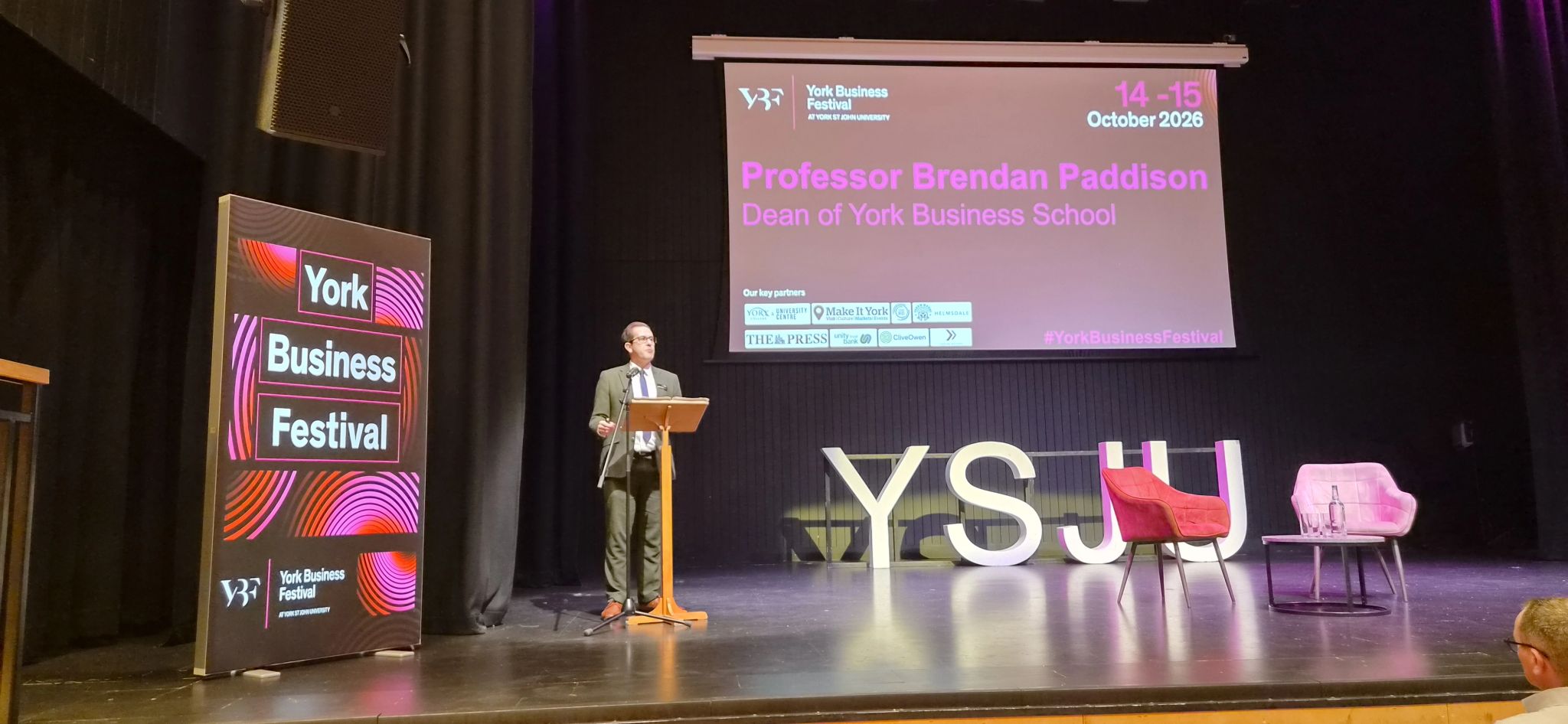
It was also encouraging to see the university, City of York Council and the York and North Yorkshire Growth Hub actively involved in the local business community.
Business support can sometimes feel remote. You hear that help is available, but it is not always obvious where to find it or who to speak to. At the festival, those organisations and the people behind them were visible and accessible. They were in the room, answering questions and helping businesses understand what support was available.
Learning From Businesses at Every Stage
Dave Callan opened the first day with a keynote about mindset in business and life. It was a strong way to begin because it encouraged everyone to think about what might really be holding them back.
Sometimes the constraint is practical. It might be money, time, skills or access to the right people. Sometimes, however, the limitation comes from the assumptions we have made about what we can do or what the next stage must look like.
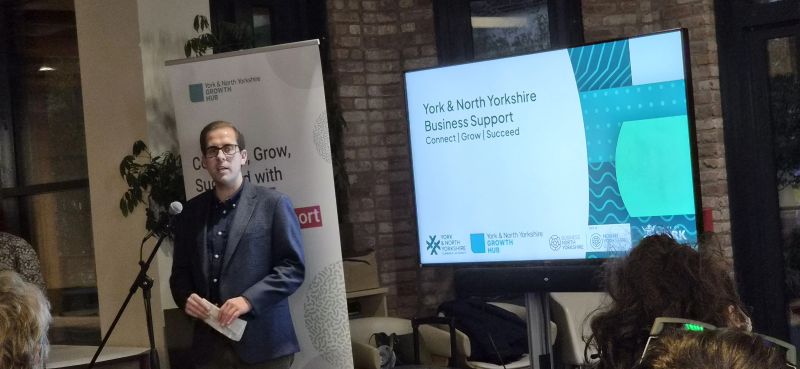
The rest of the first day included useful sessions on branding, marketing and growth. I was also invited by Harriet Stainton to put my own questions to the Growth Hub panel about scaling, business direction and finance.
On the second morning, Sir Richard Harpin talked through his journey from childhood business ideas to building HomeServe, which was eventually sold for £4.1 billion.
Hearing from somebody who has built a business at that scale could easily have felt disconnected from the day to day reality of running a smaller company. It did not. The scale was very different, but many of the underlying themes were recognisable: choosing where to focus, understanding customers, learning from setbacks and continuing to improve the model.
I also received a copy of his book, How to Make a Billion in Nine Steps, which certainly makes the process sound straightforward. I suspect there may be a little more to it than following a nine point checklist, but I am looking forward to reading it.
The value of hearing Richard speak was not that I left expecting Birdcage Tech to become a billion pound company in nine easy moves. It was the reminder that large businesses begin with much smaller decisions, experiments and lessons. You do not need to be at the same stage as somebody to learn from how they think.
My Biggest Priority Is Now Much Clearer
The festival gave me a clearer view of where I need to put more of my own attention.
I have spent much of my career focused on delivery. I like solving practical problems, building systems and finding better ways for businesses to work. That is an important strength, but running Birdcage Tech requires more than being able to deliver good work.
I need to spend more time on the commercial and marketing side of the business.
By marketing, I do not simply mean running more adverts. I mean making the offer easier to understand, explaining more clearly who Birdcage Tech helps and ensuring the business is visible when those people start looking for support.
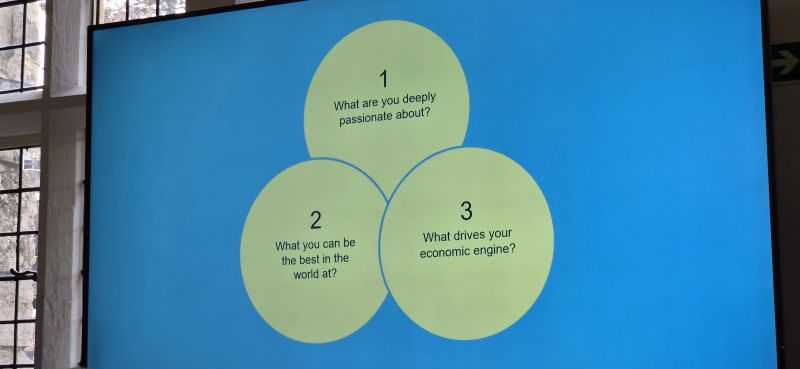
That includes improving the website, strengthening its search engine optimisation, being more deliberate about keywords and making sure Birdcage Tech is visible on Google.
It increasingly includes visibility through AI powered search and recommendation tools too. People are changing how they research suppliers and how they find answers to business problems. It is no longer enough to think only about traditional search results.
Steve Lowe from LocaliQ closed the main festival programme with a practical session on SEO, keywords, branding and online visibility. It gave me plenty to work on and reinforced something I already knew but had not prioritised enough.
Doing good work is not sufficient if the people who need it cannot find you, do not immediately understand it, or cannot see why it is relevant to their business.
I also need to simplify the Birdcage Tech offer. Bespoke software, automation and AI can cover a very wide range of problems. That flexibility is useful when delivering the work, but it can make the business harder to explain.
A prospective customer should not need a long technical conversation before they understand how Birdcage Tech might help them. The starting point needs to be clearer, more commercial and much closer to the business problem they already recognise.
AI Needs a Job, Not Just a Place in the Business
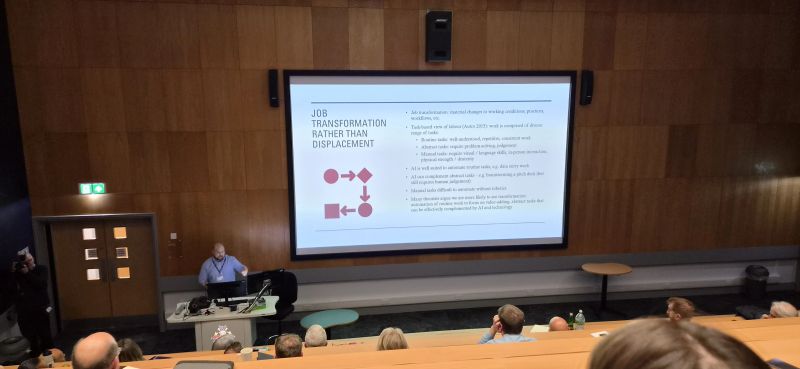
One of the sessions most directly relevant to Birdcage Tech was Professor Andrew Fairley's talk examining five myths about AI.
What made it useful was that it went beyond the usual excitement about what the latest tools can generate. It looked at the economics and business models behind large language models and data centres, as well as what the research currently tells us about returns for businesses adopting AI.
The point that stayed with me was that introducing AI broadly across a company does not automatically produce a return on investment. According to the evidence discussed in the session, many businesses are not yet reporting a clear return from general AI adoption.
That does not mean AI has no business value. It means businesses need to be much more specific about where and why they use it.
"Introducing AI" is too vague to be a useful objective. AI needs a defined job.
A business should identify a particular process or problem, understand its current cost and then decide whether technology can improve it. The result can then be measured properly. Has it saved time? Has it reduced errors? Has it shortened response times? Has it removed repetitive administration? Has it allowed somebody to focus on work that requires human judgement?
Interestingly, some of the strongest opportunities are around process automation, which may not require AI at all.
Not every problem needs a language model. Sometimes a reliable piece of software connecting two existing systems will create more value. Sometimes the answer is a structured workflow, a well designed form or the removal of unnecessary manual steps.
AI can be extremely valuable when a job involves unstructured information, interpretation or language. Traditional automation is often better when the rules are stable and predictable. In many cases, the right solution will combine the two.
That reinforced how I want Birdcage Tech to approach this work. Start with the actual business problem. Understand the process. Choose the simplest suitable technology. Then measure whether it has made the business better.
The goal should never be to add AI for the sake of saying it is there.
Leaving With More Than a Notebook
The two days ended with the Innovation Supper delivered by the Growth Hub. Three aspiring product businesses presented their ideas for the chance to secure seed funding, with plenty of opportunity for more conversations and networking around the pitches.
By that point I was absolutely knackered, but it was a good way to finish.
I left with practical ideas about Birdcage Tech's commercial direction, online visibility and offer. I also left with a stronger appreciation of the business community around me.
There are people in York at every stage of the journey, from someone testing their first business idea to someone who has built and sold a multibillion pound company. There are also universities, public organisations, advisers and experienced business owners willing to contribute.
The most useful thing I did was arrive ready to be a student.
Being open about what I did not know made it easier to ask questions, listen properly and learn from the people around me. It also made it easier to form genuine connections rather than treating networking as a numbers exercise.
My challenge now is to turn that learning into action.
For Birdcage Tech, that means putting more focus into the commercial side of the business, simplifying how I describe what we do, becoming much more visible online and continuing to concentrate AI and automation on specific business processes where the value can actually be measured.
Thank you to York St John University, York Business School, City of York Council, the York and North Yorkshire Growth Hub and everyone involved in organising the festival.
I will definitely be back next year.