When a Business Website Needs to Become a Working System
When every website enquiry creates copying, chasing and another spreadsheet, the business may need a connected web application instead of another form or plugin.
2026-08-03T06:00:00Z
Most business websites can stay straightforward. They need to explain the offer, show that the company is credible and make it easy for a potential customer to get in touch. Problems start when the enquiry form becomes the first step in a process that staff then rebuild by hand somewhere else.
Take a maintenance company receiving around fifty quote requests through its website each week. Every request lands in an inbox, an administrator copies the address and job details into a spreadsheet, somebody checks whether the postcode is covered, and a manager decides who should handle it. The customer gets an automatic acknowledgement, then often calls because they have no idea whether the job has been accepted.
Nothing in that process is especially complicated, which is why businesses can live with it for years. The cost is spread across a few minutes of copying, a few messages to clarify missing details and the occasional enquiry that sits unnoticed. At fifty requests a week, those small delays become a regular drain on the office and a poor start for the customer.
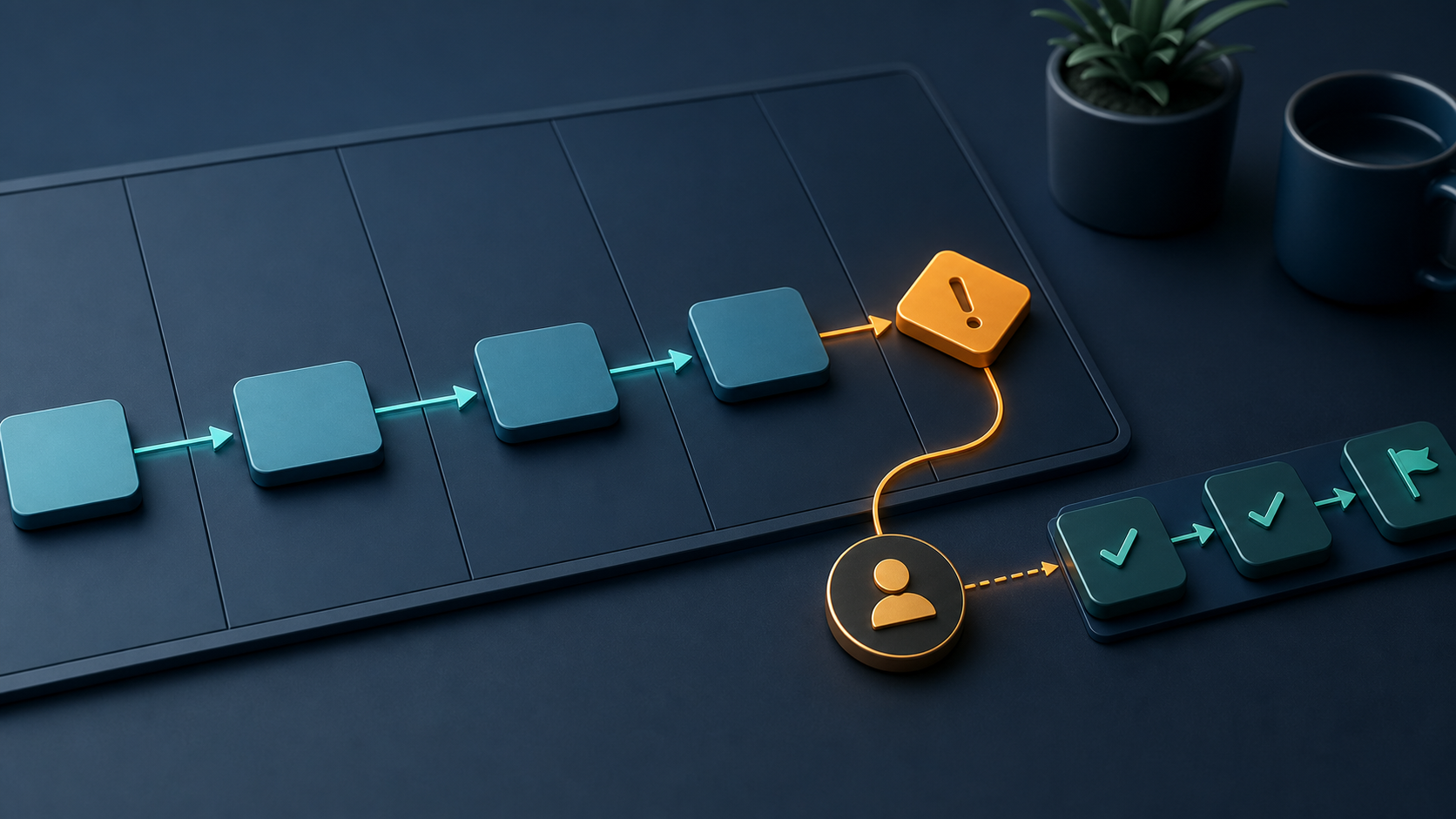
The website has reached a different stage when it needs to do more than send an email. The submission should be checked while the customer is still there, become a record that staff can work from and give both sides a clear next step. That usually calls for a connected web application or portal, built around the way the company already operates.
When a Form Creates Another Admin Queue
The maintenance company does not need to begin with a large portal project. Its first useful improvement could be one joined-up quote journey. The customer enters the site, type of work, preferred timing and contact details; the system checks required fields and service coverage; valid requests appear in one staff queue with the original information intact.
An administrator can then review the request, ask for anything genuinely missing and assign it without creating the same record again. The customer receives a reference and a useful status instead of a generic message that says somebody will be in touch. Managers can see how many requests are new, waiting or assigned without collecting updates from several people.
This is where another form plugin often falls short. It may improve the questions on the page, yet the answer still arrives as an email and leaves staff to manage the actual work. The useful boundary for the first release is far enough into the process to remove the spreadsheet, the retyping and the internal chasing created by that submission.
The figures make the decision easier. The owner can measure the time currently spent setting up each request, how many arrive incomplete, how often customers chase for an update and how many enquiries are lost before assignment. Those numbers show whether connected software is worth building and provide a sensible test for the finished result.
Work Out Where the Record Belongs
Many SMEs already have a CRM, scheduling tool or job-management system, even if the website is not connected to it. Building a new application without deciding which system owns the customer and job record creates another place for information to drift out of date.
For the maintenance company, the job system might remain the main record. The web application can collect and validate the request, check known customer details and create a prepared job for staff to approve. If the existing software cannot hold the information or stages the team actually needs, the new application may have to take more responsibility. Either route is workable once ownership is explicit.
Customer accounts add another layer. A login screen is easy to picture, but the business still has to decide who belongs to each customer organisation, which jobs they can see, whether several people can manage the same account and what happens when somebody leaves. These rules need input from the staff who deal with customers every day because generic membership settings rarely match a real commercial relationship.
The staff view deserves the same attention as the customer screen. It needs to make incomplete requests obvious, keep exceptions visible and show what has failed when an integration does not complete. If the team still needs a private spreadsheet to control what arrived through the new system, the first release has stopped too early.
Build One Complete Journey First
There is little value in launching accounts, document uploads, online payments and status tracking as four half-connected features. One complete high-volume journey will tell the business much more. It should start with the customer's action and finish when staff have accepted, assigned or completed the work without recreating the record.
Real use will expose details that a planning session misses. Customers will submit duplicates, attach the wrong file, change an appointment and use shared email addresses. Staff will need to correct information and recover failed updates. Handling those ordinary cases well is what turns a promising demonstration into software the business can depend on.
The results should be visible in the operation: less time spent copying requests, fewer incomplete records, fewer calls asking for progress and faster assignment to the right person. Page views are secondary because the website is now carrying work, and its value comes from making that work easier to deliver.
Once a website reaches this stage, it also needs a clear owner, monitoring, backups and planned maintenance. The business is relying on it in the same way it relies on its other operational systems, so it should be treated as a working product rather than a website project that finishes on launch day.
Birdcage Tech builds websites, web applications and customer portals around the processes SMEs already use. A good starting point is the online action that currently creates the most copying and chasing behind the scenes, then carrying that one journey far enough to remove the manual queue it creates.