
AI is often presented as a new place to have a conversation. A user opens a chat window, explains what they need and decides what to do with the answer. That can be useful, but it also asks people to leave the process they are already following and learn another interface.
Many stronger business uses are quieter. The AI sits inside an existing workflow, reads information that already arrived and prepares the next piece of work. Staff may see a completed record, a suggested category or a concise case summary without ever opening a chatbot.
Take a service business receiving a hundred messages a day through a shared inbox. Staff read each email, identify the customer or site, work out whether it is a new request, an update or an urgent problem, then copy the important details into a CRM or job system. During busy periods, the expensive part is not writing replies; it is the repeated reading, classification and data entry before anybody can start the real work.
A narrow AI integration could prepare those records inside the existing process. It could extract the customer, location, requested work and relevant dates, suggest the correct queue and leave uncertain messages for a person. The operations manager gains faster assignment and fewer missed requests without asking customers to use a bot or asking staff to monitor another application.
Start With Repeated Interpretation
Operational teams spend significant time turning unstructured information into structured work. They read an email to identify the customer and request, open an attachment to find dates and reference numbers, choose a category and create a record in another system.
Traditional automation handles predictable fields well but struggles when the same meaning appears in varied language and document layouts. AI can provide the interpretation layer. It can extract candidate details, summarise the request and suggest where it belongs.
The use case is strongest when the input is frequent, the next step is known and the output can be checked. “Understand every email” is too broad. “Identify these request types, extract these fields and route uncertain cases to this queue” creates something that can be tested and operated.
Keep the Existing Route
If customers already use email, a form or a portal successfully, an AI project does not need to force them into a new conversation. The integration can watch the established entry point and improve what happens behind it.
The same applies to staff. A prepared result can appear in the CRM, case system or project board they already use. Adoption becomes easier because the workflow changes at the point of effort rather than adding a separate destination that somebody must remember to check.
This also keeps responsibility visible. The business system remains the record of the case, with its owner, status and audit history. AI contributes to the work without becoming an isolated source of decisions.
Separate Interpretation From Action
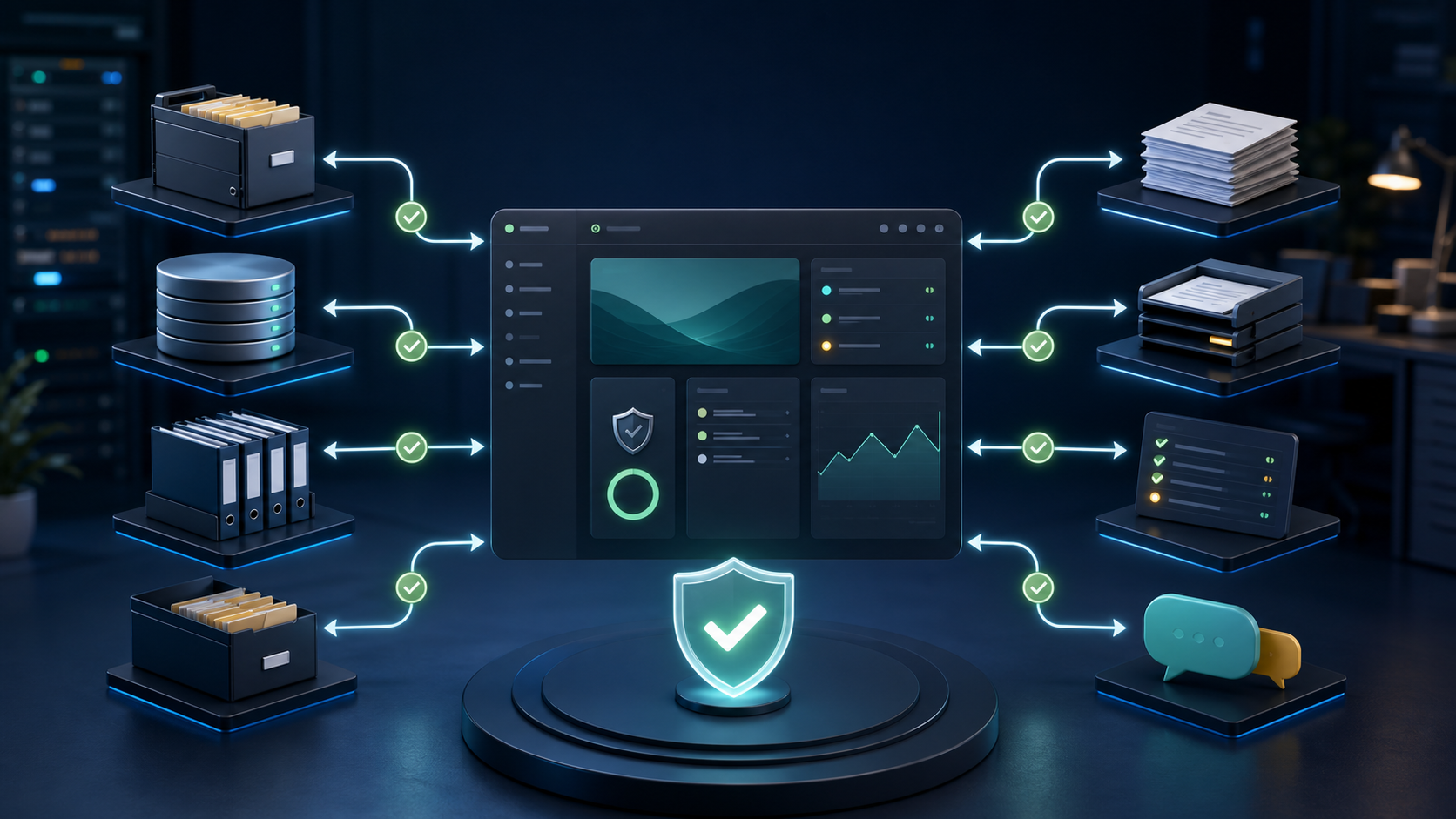
Reading a document and changing a customer account are different levels of authority. A dependable integration separates them. The AI proposes structured information, ordinary software validates required formats and workflow rules decide whether the result can proceed.
For example, the model may identify a policy number and requested change. The system can confirm that the policy exists, check that the sender is authorised and determine whether the change requires approval. Any contradiction, missing evidence or low-confidence result goes to a person.
This design limits the consequence of an imperfect interpretation. It also produces clearer testing because each control has a defined purpose. The model does not need to carry every business rule inside a long instruction.
Make the Benefit Visible
Quiet automation can be overlooked if success is measured only through usage of an AI interface. The useful measures are operational: time from receipt to assignment, manual fields entered, avoidable rework, queue age and the proportion of cases requiring correction.
Review activity should be measured too. If staff repeatedly amend the same field, the extraction guidance or source material needs attention. If a category creates many escalations, its definition may be unclear. These patterns create a practical improvement loop.
The people doing the work should understand what the integration prepares and what it does not decide. Invisible should not mean mysterious. A field can show its source, a summary can link to the original document and an automated action can retain evidence of why it occurred.
Choose Boring Reliability
Background integrations must cope with duplicate messages, unsupported files, temporary outages and unexpected formats. They need monitoring, retry rules and a queue for work that cannot complete. These details receive less attention than an impressive demonstration, but they determine whether the system survives normal operations.
A narrow integration that processes one common document type reliably can produce value quickly. The scope can expand using real evidence about exceptions and review effort. Trying to interpret every possible input from day one makes it harder to know whether the workflow is safe or useful.
Birdcage Tech builds AI integrations into the systems and processes SMEs already use. A useful first project takes one high-volume inbox or document type, measures the time spent interpreting it and proves that the right information can reach the right queue faster without weakening human control.