
OpenAI's latest announcement is not just another update to ChatGPT. It is a sign of where business AI is heading next: away from simple question-and-answer use and toward agents that can take a goal, gather context, work across tools, and produce something useful with less manual pushing from the user.
The new product is called ChatGPT Work. OpenAI describes it as an agent inside ChatGPT that can take action across apps and files, stay with a project for hours if needed, and turn a goal into finished work. That matters because most businesses do not struggle because they lack ideas. They struggle because useful work is spread across emails, documents, spreadsheets, Slack messages, meeting notes, CRMs, calendars and half-finished internal processes.
For SMEs, this is where the announcement becomes interesting. The biggest value of AI is not always a better-written email or a faster summary. The bigger value is taking the repetitive coordination work that quietly burns hours every week and turning it into a process that can be delegated, reviewed and improved.
The Practical Shift
A lot of current AI use still depends on the user doing most of the project management. Someone has to upload the right file, paste the right notes, ask the next prompt, copy the answer into a document, check another system, then come back and ask for the next step. That can still save time, but it leaves the human acting as the glue between every system.
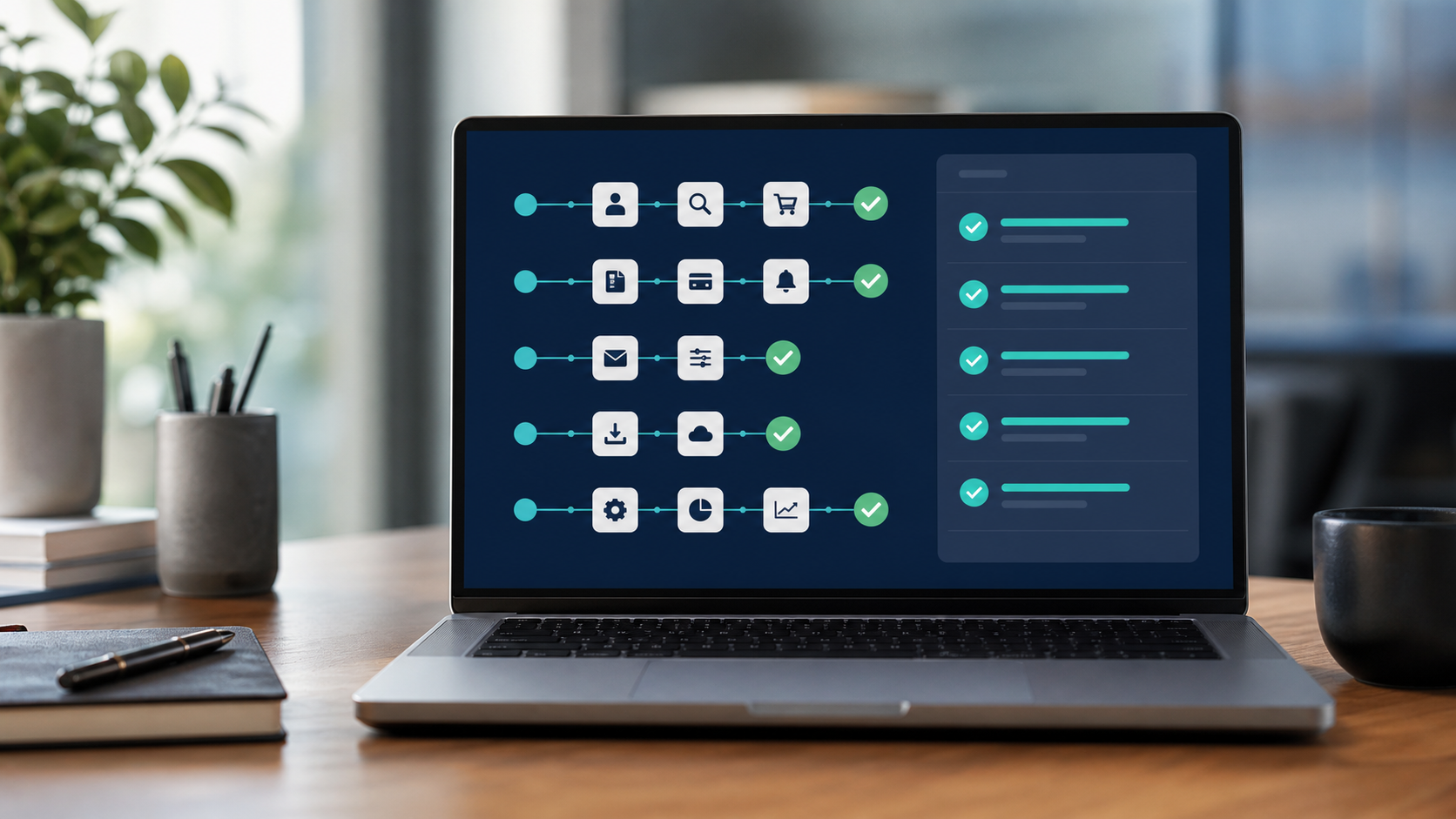
ChatGPT Work is designed to reduce that gap. OpenAI says it can connect to tools such as Slack, Microsoft Teams, Google Drive, SharePoint, email, calendars, CRMs, project trackers and other internal systems. Once those connections are in place, the user can give it a business task rather than a tiny instruction. Instead of asking it to summarise meeting notes, a sales manager could ask it to review the latest account activity, compare it with CRM records, update the account plan, and prepare a briefing for tomorrow's call.
That is a more useful model because real work rarely lives in one document. A client update might be partly in an email thread, partly in a CRM note, partly in a call transcript, and partly in someone's memory. The promise of this kind of agent is that it can pull those pieces together and produce something closer to a finished output.
Where This Becomes Useful
The strongest business use cases are the ones where the process already exists, but it is slow, inconsistent or too dependent on one person remembering to do everything.
In sales, ChatGPT Work could help maintain account plans as new activity comes in. It could review CRM updates, meeting notes, email follow-ups and customer documents, then produce a short account briefing before a call. A useful instruction would be to prepare a briefing from the CRM record, recent email threads, meeting notes and open tasks, then highlight what changed, what needs following up and where the account may be at risk of losing momentum.
In finance, the value is in preparation and reconciliation rather than replacing judgement. A finance lead could ask it to review a month-end spreadsheet, compare it with the forecast, pull supporting notes from shared files, and prepare a first version of the variance explanation. The finance team would still validate the numbers, but they would spend less time assembling the pack and more time understanding what changed.
In operations, it could help keep recurring reviews alive. Many businesses intend to review customer feedback, support issues, team capacity, delivery delays or sales handovers every week, but the work slips because no one has time to pull everything together. An agent that checks the relevant systems every Monday morning and prepares a short operational summary could make those reviews far more consistent.
Marketing is another obvious area. A business could ask ChatGPT Work to turn customer research into a campaign brief, then use that brief to produce a landing page outline, email copy, social posts and a simple internal launch tracker. The important part is continuity. Instead of treating each asset as a separate task, the same context carries through the campaign.
How To Use It Well
The businesses that get the best results will not be the ones that simply tell staff to use AI more. They will be the ones that identify repeatable workflows and turn them into clear delegated tasks.
A weak instruction would be vague, such as asking for help with sales. A stronger instruction would ask the agent to review the week's CRM notes, email follow-ups and meeting transcripts, then produce a pipeline update showing deals that moved forward, deals that stalled, missing next steps and accounts that need management attention. It should also make the approval boundary clear, such as not sending anything externally without review.
That kind of instruction works because it gives the agent a job, a schedule, a set of sources, an output format and a control boundary. Those details matter. Agentic tools are more powerful when they know what good work looks like, what systems they should use, and where they must stop for human approval.
For smaller businesses, a sensible starting point would be to choose one internal workflow that is useful but not risky. Weekly sales prep, customer feedback summaries, meeting follow-up packs, project status updates and management reports are good candidates. They involve real business value, but they do not require the AI to make irreversible decisions or communicate externally without review.
The Control Layer Is Not Optional
As AI agents become more capable, access control becomes more important. If an agent can read files, use connected tools, browse websites, update documents and prepare outputs, the business needs to be clear about what it can see and what it can change.
OpenAI's announcement puts emphasis on admin controls, connected-tool permissions, approval points, compliance visibility and governance for organisations. That is not just enterprise box-ticking. It is the difference between a useful assistant and a messy automation risk.
The practical rule is to start with read-heavy workflows first. Let the agent gather information, prepare summaries, draft documents and flag issues. Once that is working reliably, the business can consider allowing it to update internal documents, refresh dashboards or trigger low-risk scheduled tasks. External messages, financial actions, customer commitments and sensitive data sharing should stay behind explicit approval until the workflow is proven.
What This Means For SMEs
For SMEs, the opportunity is not to copy how large companies use AI. The opportunity is to remove the admin drag that stops small teams from operating properly.
A larger company may have analysts, sales operations teams, project coordinators and internal reporting functions. A smaller business often has the same needs, but the work falls onto founders, managers or already-busy staff. That is why agents like ChatGPT Work matter. They could give smaller teams some of the operational support that used to require extra headcount or a lot of manual discipline.
The real benefit will come when AI is connected to business workflows rather than used as a separate writing tool. A company that uses it to prepare better sales calls, keep follow-ups moving, summarise customer feedback, maintain internal trackers and produce more consistent management information will feel the difference quickly.
ChatGPT Work is still something businesses will need to configure carefully, and it should not be treated as magic. But the direction is clear. AI is moving from answering isolated prompts to helping complete actual work. For SMEs, that shift could be far more valuable than another productivity app, because it targets the place where time is usually lost: the messy space between systems, people and decisions.
Source: OpenAI, "ChatGPT is now a partner for your most ambitious work", published 9 July 2026: https://openai.com/index/chatgpt-for-your-most-ambitious-work/