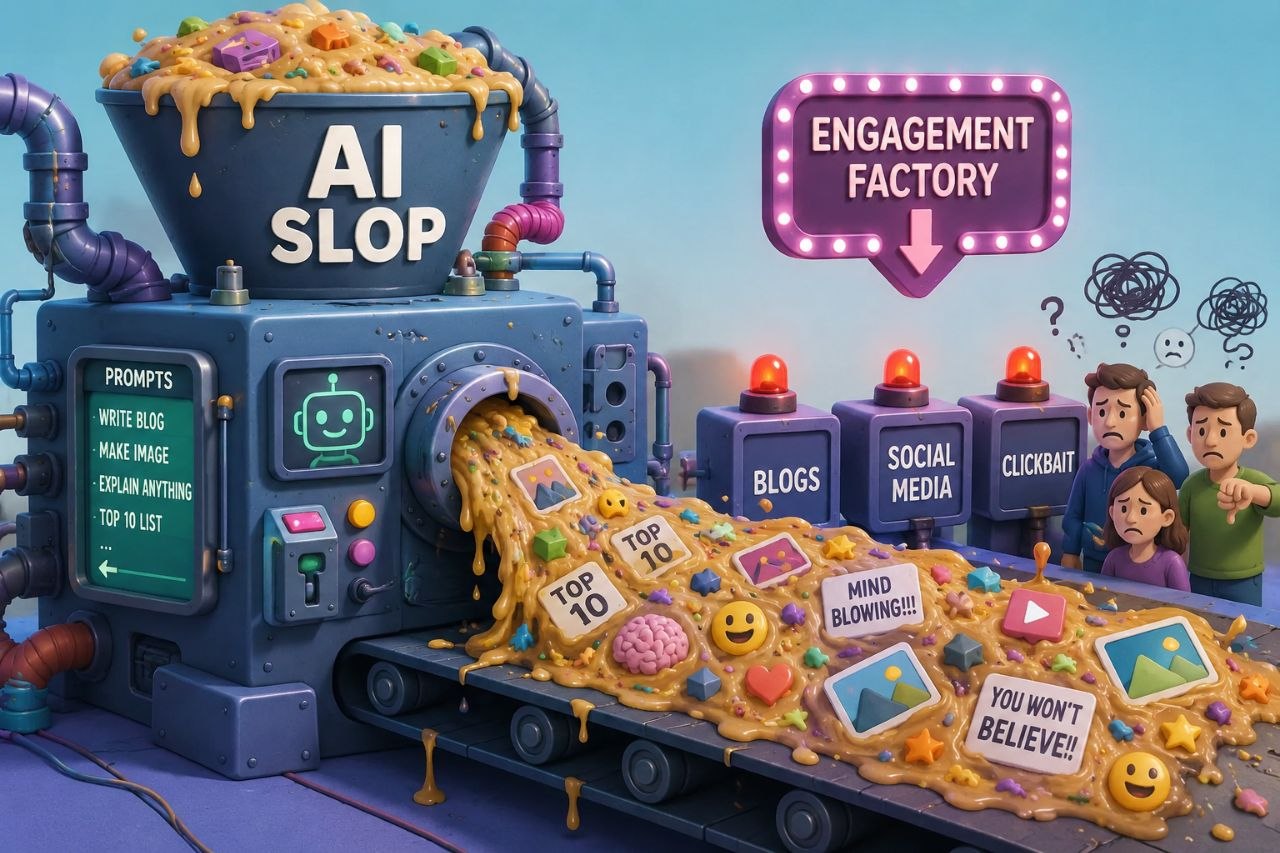

AI has moved quickly from boardroom curiosity to everyday business tool. Staff are using it to draft emails, summarise documents, research suppliers, write first-pass reports and speed up admin. For many businesses, that is already useful. The problem is that useful individual activity is not the same as a working business system.
That gap is becoming clearer. Recent UK research points to a familiar pattern: AI adoption is rising, but a much smaller proportion of organisations are embedding it into core operations in a way that changes productivity, revenue or service quality. Accenture’s 2026 UK research found that only one in ten UK organisations had successfully scaled AI or embedded it into core operations. The GOV.UK AI Adoption Research also shows that, while some businesses are seeing benefits, adoption remains uneven and many firms are still held back by uncertainty, skills, trust and implementation barriers.
For SMEs, this matters because the hype can make AI look like a simple tool-buying decision. Subscribe to a platform, give people access, wait for productivity to improve. In practice, the businesses that get value usually do something less glamorous and more useful: they pick a specific process, connect the right data, define the handover points, and build a workflow that people can actually rely on.
The issue is not that AI is failing. The issue is that many AI projects are not really projects at all. They are experiments without ownership, pilots without a route into daily work, or tools sitting beside the real process rather than inside it.
A common example is customer enquiry handling. A business might test an AI assistant that can draft responses or summarise inbound messages. The demo looks impressive, but the value does not appear unless the assistant is connected to the right inboxes, knows which enquiries matter, understands the company’s service rules, flags exceptions, creates follow-up tasks, and hands unresolved cases to the right person. Without those connections, the tool is just another tab in the browser.
The same pattern appears in reporting. AI can summarise numbers, explain trends and draft commentary, but the real saving comes when the data is collected automatically, the report is generated on a schedule, unusual figures are highlighted, and the output lands where the decision-maker already works. Otherwise, someone still has to gather screenshots, export CSVs, paste figures into a document and check whether anything changed.
This is where SMEs can move faster than larger organisations. Big companies often have layers of governance, legacy systems and stakeholder management before anything reaches production. Smaller businesses usually have fewer systems, shorter decision chains and clearer pain points. That should be an advantage, but only if AI work starts with the business process rather than the technology.
The practical question is not how to use AI in general. It is which repeated piece of work is slow, error-prone or dependent on someone remembering to do it. That might be chasing missing information, updating a CRM, preparing quotes, sorting documents, checking job applications, triaging support tickets, reconciling supplier data, or turning meeting notes into actions. These are not dramatic use cases, but they are often where the time is actually lost.
A good AI automation project normally has a narrow scope. It takes one workflow and makes it measurably better. It has a clear before-and-after state. It defines what the system is allowed to do by itself and what still needs human approval. It includes logging, fallback behaviour and a way to correct mistakes. It respects the messy reality of business data instead of assuming every input will be clean.
That last point is important. Many AI pilots look good when tested against tidy examples. They fail when exposed to the real business: incomplete records, inconsistent naming, missing attachments, vague customer messages, old spreadsheets, edge cases and exceptions that only one person understands. Production AI needs to be designed for that mess. It should not collapse the first time a supplier uses a different file format or a customer phrases something oddly.
This is also why AI strategy can be a distraction for SMEs if it stays too abstract. A smaller business rarely needs a six-month transformation programme before it can get value. It needs a sensible first workflow, implemented properly. The strategy can grow from there. Once the first automation is working, the business has a pattern it can repeat: identify the task, map the process, connect the data, add AI where it helps, test with real cases, measure the outcome, and improve it over time.
There is still a place for experimentation. People should try tools, learn what is possible and build confidence. But experimentation should not be confused with operational change. If a business wants AI to save time every week, improve response speed or reduce manual admin, someone has to turn the idea into a maintained workflow.
That means asking practical questions early. Where does the work start? Where does the information come from? Who checks the output? What happens if confidence is low? How is the result recorded? Who owns the process when something changes? These questions are less exciting than a product demo, but they are usually the difference between a pilot that gets forgotten and a system that keeps delivering.
For many SMEs, the best first AI project will not look like a chatbot or a futuristic agent. It will look like reliable business plumbing. It will remove a repetitive task, reduce the number of handoffs, keep records cleaner, or make sure follow-ups happen on time. The result might not be dramatic in a presentation, but it will be felt by the people doing the work.
That is where AI becomes useful: not as a novelty, but as part of the operating system of the business.
The next phase of AI adoption will not be won by the companies that tried the most tools. It will be won by the companies that turn the right tools into dependable workflows. For SMEs, that is good news. They do not need to outspend larger competitors. They need to pick the right process, build carefully, and make sure the automation survives contact with the real world.
Birdcage Tech helps SMEs turn AI ideas into practical workflows that reduce manual work, improve consistency and fit the way the business actually operates. If you want to move beyond experiments and get one useful workflow into production, we can help you choose the right starting point and build it properly.
Source note: this article references GOV.UK’s AI Adoption Research and Accenture’s 2026 UK AI productivity research. The hero image is derived from the GOV.UK AI Adoption Research page, Crown copyright 2026, licensed under the Open Government Licence v3.0.